You are here

Modelling Human Attributes in Autonomous Systems Operations

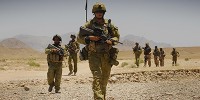
Unmanned Systems (UMS) have the potential to provide significant benefits when used in military operations that are dangerous, dirty, and/or dull; the principal benefit cited in a variety of literature is of reducing the risk of human casualties.

Modelling Complex Warfighting (MCW) Research Agenda

The Defence problem space has expanded considerably in recent years, with the operating environment now ranging from cooperation through to conflict, often with blurred boundaries in between. Additionally, the physical domains of air, land and sea have been expanded to include information and cyber and space. Defence seeks new sources of adversarial advantage to prevail in this contested environment. New operations analysis approaches are required to provide meaningful evidence-based decision-support associated with this problem space.

Revised Anthropometry Guidance for the Royal Australian Navy

This document presents the anthropometric percentile data captured in the 2015 Anthropometric Survey of the Royal Australian Navy (ASRAN) and provides information on how to apply the data and assess designs. Additional information presented includes information on RAN secular trend, personal equipment and clothing correction factors, and other allowances that need to be considered when applying the anthropometric data.

A Revised Maritime Physical Accommodation Guidance for the Royal Australian Navy

In 2015 an Anthropometric Survey of the Royal Australian Navy (ASRAN) was conducted providing comprehensive digital and manual anthropometric data (body size and shape) that can be used for the design of vessels, equipment, and clothing. This document has used that data to develop evidence based human factors engineering design guidance that can be used to tailor design solutions to optimise the fit between the Royal Australian Navy (RAN) population and Her Majesty's Australian (HMA) Surface Ships and Submarines, and their systems, subsystems, and facilities.

Measuring resilience and what it can tell us about PTSD

Hero Image: 

In this innovative project, scientists are looking at what habituation to startling stressors can tell us about resilience.

Thoraco-abdominal Organ Locations: Variations due to Breathing and Posture and Implications for Body Armour Coverage Assessments

Body armour is used by police and military personnel to provide passive protection of the vital organs of the thorax and abdomen against ballistic, fragmentation and stab threats. Optimising the amount of coverage provided by body armour requires consideration of the trade-off between the passive protection afforded by the armour and its potential to hinder wearers' ability to actively protect themselves.

Ramping up individual and team performance

Hero Image: 
HPRnet was established by DST and Army in 2016 to help address Army’s top Human Performance research priorities.

DST's human performance researchers Dr Susannah Whitney and Phil Temby have joined forces with two West Australian universities to study individual and team performance in the Australian Army.

Concept Development of a Modular Automated Care Stretcher

In this report we propose a concept for a casualty evacuation stretcher with continuous monitoring and automated care functionality.

Forensic (Facial) Comparison: Linking the Science and the Practice - Course Overview and Evaluation

The Australian Federal Police (AFP), Facial Identification - Specialist Operations Branch, commissioned the Defence Science and Technology (DST) Group to develop and deliver a training course for staff working in the forensic facial comparison domain.

Raising the bar on ration pack snacks

Hero Image: 
Raising the bar on ration pack snacks

Defence scientists based at DST's Scottsdale site are developing and evaluating an eat-on-the-go, supplementary food bar for the ADF, with a focus on provision of adequate energy, micronutrients and gut health.

Pages